Automate the Work. Accelerate the Results.
Most enterprises struggle with operational inefficiencies not because of technology limitations, but because workflows are fragmented, manual, and inconsistent. Soltec helps organizations automate, standardize, and optimize workflows to improve execution, visibility, and operational performance.
The Manch Platform
Centralized Workflow Orchestration
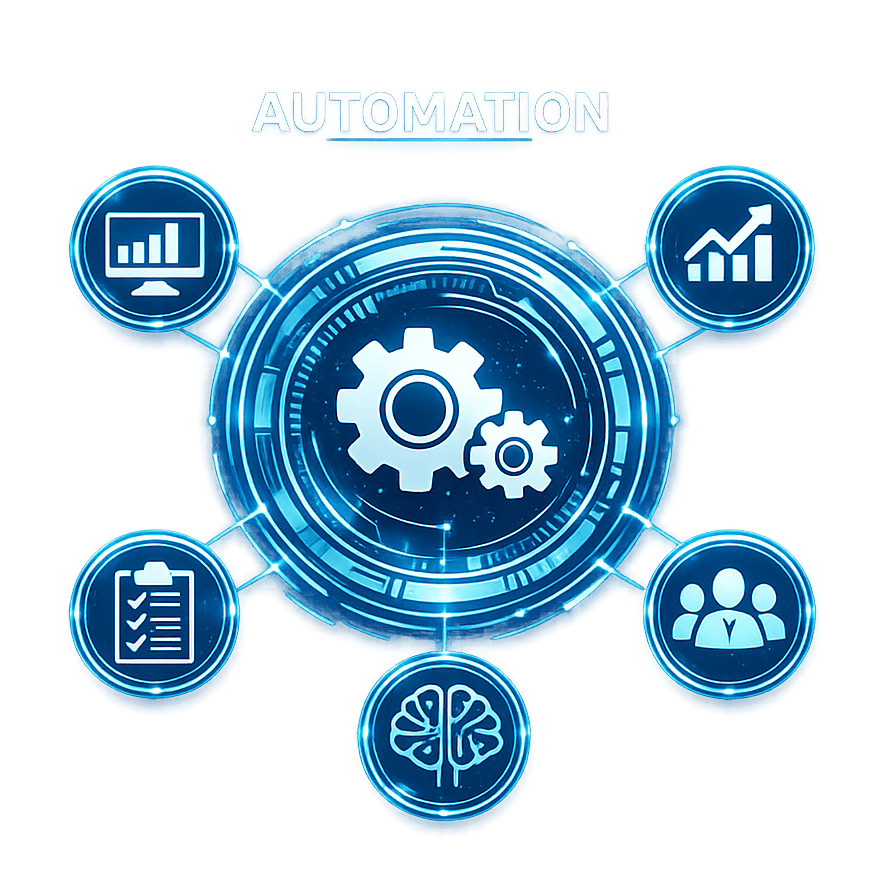
Soltec’s recommended workflow automation solution is the Manch Platform—a centralized orchestration layer designed to work alongside existing ERP, CRM, and line-of-business systems.
It acts as a single control plane for orchestrating work, enforcing business rules, and managing handoffs across the enterprise—without disrupting the systems already in place.
Unified
One Platform. All Workflows.
Unlike traditional automation tools that operate in silos or require heavy customization, the Manch Platform unifies workflows across systems, domains, and stakeholders — giving leaders real-time visibility, control, and confidence in how work is executed.
Governed
One Platform. All Workflows.
Every workflow is designed with built-in validation, governance, and business controls — ensuring trusted data, process integrity, and compliance before information enters enterprise systems. By validating inputs upstream, organizations can reduce downstream rework, reconciliation, errors, and compliance risk.

Reliable, AI-Ready Data
Validated inputs that AI and analytics can trust.

Consistent Execution
The same governed process across teams, systems, and locations.

Reduced Risk
Operational and compliance risks addressed within workflow execution.

Scalable Foundation
A foundation designed to scale across automation, analytics, and AI.
How Manch is Different
How the Manch Platform outperforms traditional platforms.
Most enterprise platforms were designed to automate tasks inside a single system. Manch is designed to orchestrate end-to-end business processes across systems, domains, and stakeholders — while embedding governance and data quality from the start.
Partner & Vendor Onboarding with Built-In Controls
The Challenge
Traditional platforms often depend on third-party tools for identity verification, document handling, and compliance — introducing delays, cost, and integration risk.
The Manch Difference
Onboarding workflows are orchestrated end-to-end with embedded verification, approvals, and document controls — helping reduce cycle times while maintaining compliance.
Business-Centric Data Orchestration
The Challenge
Many platforms focus on technical configuration data, leaving customer, vendor, and product data fragmented across systems and tools.
The Manch Difference
Manch orchestrates business-critical data across workflows, supporting consistency, validation, and governance as data is created and maintained.
Workflow Configuration Without Heavy Customization
The Challenge
Legacy platforms may require specialized developers, scripting, or costly customization to adapt workflows as business requirements change.
The Manch Difference
Workflows are configured through governed orchestration rules that business and IT teams can evolve together — supporting faster change with fewer dependencies.
Embedded Governance, Risk & Compliance
The Challenge
In many platforms, governance and compliance are layered onto workflows after implementation, creating potential control gaps, rework, and audit risk.
The Manch Difference
Governance, controls, and auditability are embedded directly into workflows — helping enforce compliance by design rather than adding it after execution.
Data Quality Enforced at the Point of Execution
The Challenge
Many platforms identify data issues only after information has entered enterprise systems, resulting in cleanup, reconciliation, and downstream fixes.
The Manch Difference
Data is validated as workflows execute — helping prevent errors before they propagate and creating a more reliable, AI-ready data foundation.
Intelligent Document Handling with Built-In Validation
The Challenge
In many platforms, governance and compliance are layered onto workflows after implementation, creating potential control gaps, rework, and audit risk.
The Manch Difference
Governance, controls, and auditability are embedded directly into workflows — helping enforce compliance by design rather than adding it after execution.
WHY THIS MATTERS
The difference isn't features — it's architecture.
Manch enables organizations to operate with greater consistency, control, and confidence across workflows, data, and governance — without unnecessarily adding complexity or fragmenting the technology landscape.
Accelerate transformation with lower total cost of ownership
Enable business teams — not just IT — to improve and scale workflows
Embed compliance and governance into workflow execution
Produce consistent, AI-ready data leaders can trust
Business Impact
Business impact of poor workflow execution.
Delays, manual effort, inconsistent outcomes, poor visibility, and higher operating costs can accumulate silently across fragmented workflows.
Wasted Capacity
Longer Process Cycles
Errors from Manual Steps
Faster Execution
Cost Reduction
Roadmap Clarity
Our Approach
How Soltec helps enterprises optimize workflows.
We combine consulting-led methodology with deep operational expertise across five critical workflow improvement dimensions.
Process Discovery & Mapping
End-to-end documentation and visualization of existing workflows — capturing handoffs, dependencies, decision points, and bottlenecks across functions.
Workflow Optimization
Redesign workflows to eliminate waste, reduce unnecessary complexity, improve cycle times, and standardize execution before automation is applied.
Workflow Automation Strategy
Prioritize automation opportunities based on business impact, feasibility, and ROI, then develop a phased roadmap aligned with enterprise goals.
Process Governance & Controls
Embed process ownership, accountability, business controls, and audit requirements into automated workflow design.
Operational Visibility & Reporting
Design KPI frameworks and reporting capabilities that give leadership greater visibility into workflow performance, exceptions, and bottlenecks.
Our Framework
Workflow Automation Framework.
A proven five-phase approach that helps enterprises move from fragmented manual processes toward scalable, governed automation.
01
Assess
Map current workflows, identify bottlenecks, and benchmark process maturity.
02
Standardize
Redesign and document workflows to eliminate waste and ensure consistency.
03
Automate
Implement automation across prioritised workflows with governance built in.
04
Monitor
Track performance, adoption, and compliance in real time with KPI dashboards.
05
Optimise
Continuously refine workflows and scale automation based on operational data.
Why Soltec
Why enterprises choose Soltec for workflow automation.
We bring the operational depth and enterprise experience that pure-play technology vendors and tool-focused implementers can’t match.
35+ Years Consulting Experience
Deep enterprise knowledge across complex, multi-industry operational environments.
Operational Execution Expertise
We focus on how the enterprise actually operates — not simply which tools it uses. Process-first, technology-second.
Enterprise Workflow Optimization
Hands-on experience improving workflows across manufacturing, automotive, supply chain, finance, and other enterprise functions before automation is applied.
Governance-Driven Approach
Workflow engagements incorporate controls, accountability, auditability, and governance from the beginning.
Cross-Functional Process Improvement
We work across departmental boundaries to connect finance, operations, IT, HR, and other functions into more coherent enterprise workflows.
Where is manual work costing you?
Talk with a Soltec expert to map your workflow bottlenecks, automation opportunities, and the fastest path to measurable operational gains.
Talk with Soltec experts to identify workflow bottlenecks, automation opportunities, and operational improvements.
Frequently Asked
Workflow Automation — Common Questions
The questions operations leaders ask before starting a workflow automation program.
What is workflow automation?
Workflow automation uses technology, business rules, and defined triggers to execute repeatable process steps with less manual intervention. It helps reduce manual handoffs, improve consistency, minimize errors, and accelerate process execution.
What is the difference between workflow automation and business process automation (BPA)?
Workflow automation typically focuses on automating specific tasks and process flows, while BPA takes a broader approach to optimizing and automating end-to-end business processes across functions and systems.
How do I identify workflow bottlenecks in my organization?
Start by mapping the complete workflow and reviewing delays, manual handoffs, duplicate work, approval queues, exceptions, and recurring rework. Process data and stakeholder input can help identify the highest-impact bottlenecks.
How does workflow automation improve operational efficiency?
It reduces repetitive manual work, standardizes execution, improves process visibility, accelerates cycle times, and allows teams to focus more capacity on higher-value activities.
Why is workflow governance important for automation?
Governance establishes clear ownership, controls, approval rules, accountability, and auditability so automated workflows operate consistently and responsibly.
What processes should be automated first?
Prioritize repetitive, rules-based, high-volume processes with frequent manual handoffs, delays, errors, or measurable operational impact.
How long does a workflow automation engagement take?
The timeline depends on workflow complexity, number of systems involved, process maturity, and implementation scope. A workflow assessment should first define priorities, dependencies, and a phased roadmap before implementation begins.