
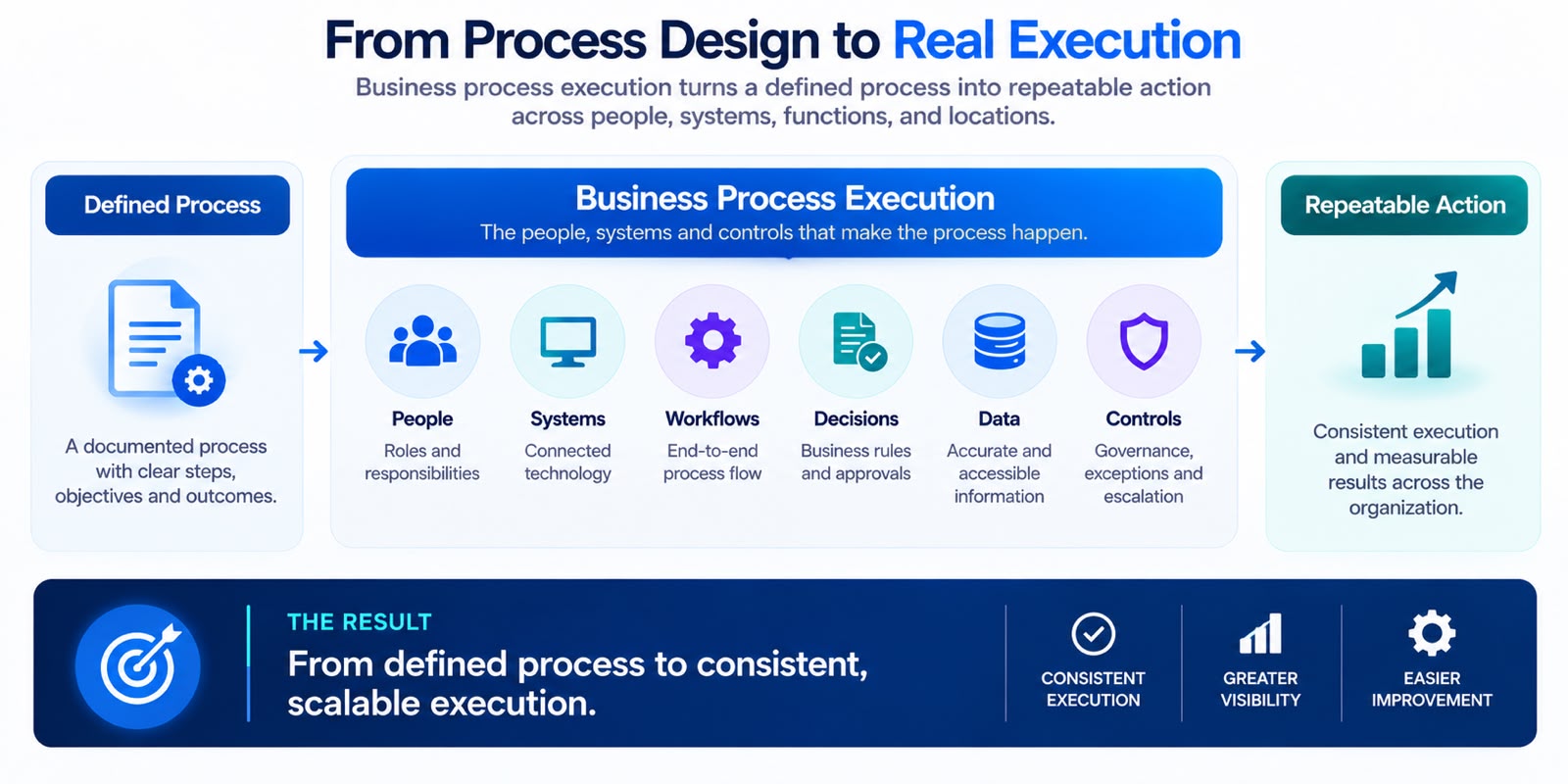
Most organizations have defined processes. The bigger challenge is ensuring those processes are executed consistently across people, systems, functions, and locations.
That is the role of business process execution.
Business process execution is how an organization turns a defined process into repeatable action. It encompasses the workflows, responsibilities, decisions, data, controls, and technology required to move work from beginning to end.
The distinction matters because a well-designed process does not automatically produce a well-executed process.
Why Business Processes Break Down in Execution
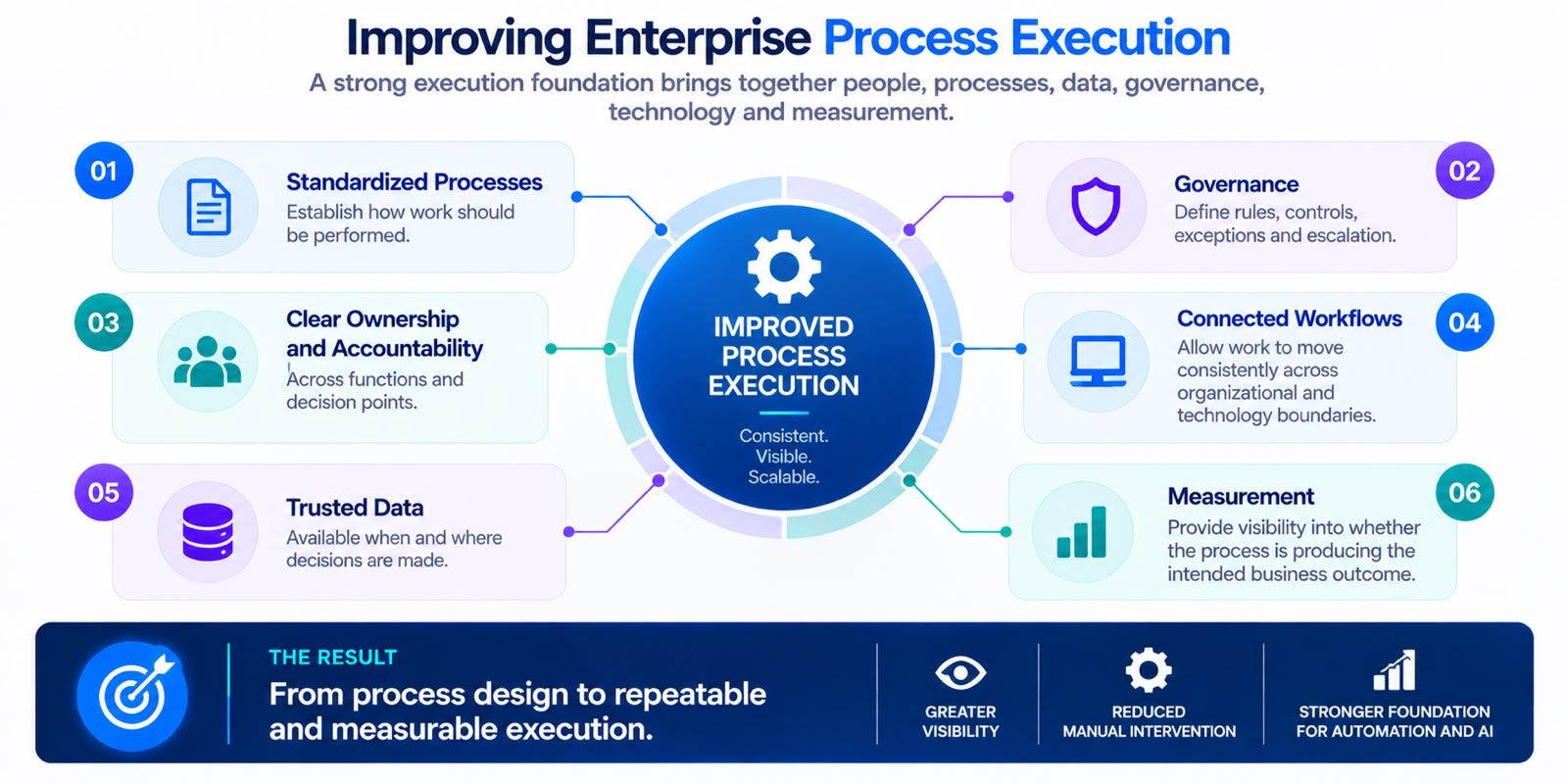
Enterprise processes rarely operate within a single department or system. A customer onboarding process, for example, may involve sales, finance, operations, compliance, master data, and multiple technology platforms.
As complexity increases, organizations often compensate with manual intervention. Employees reconcile information between systems, track approvals through email, resolve exceptions offline, and carry knowledge that isn’t captured in the process itself.
The process may work, but its success increasingly depends on people holding the pieces together.
That creates variability, limits visibility, and makes improvement difficult to scale.
Improving Enterprise Process Execution
Improving execution starts with understanding how work should happen—not simply automating how it happens today.
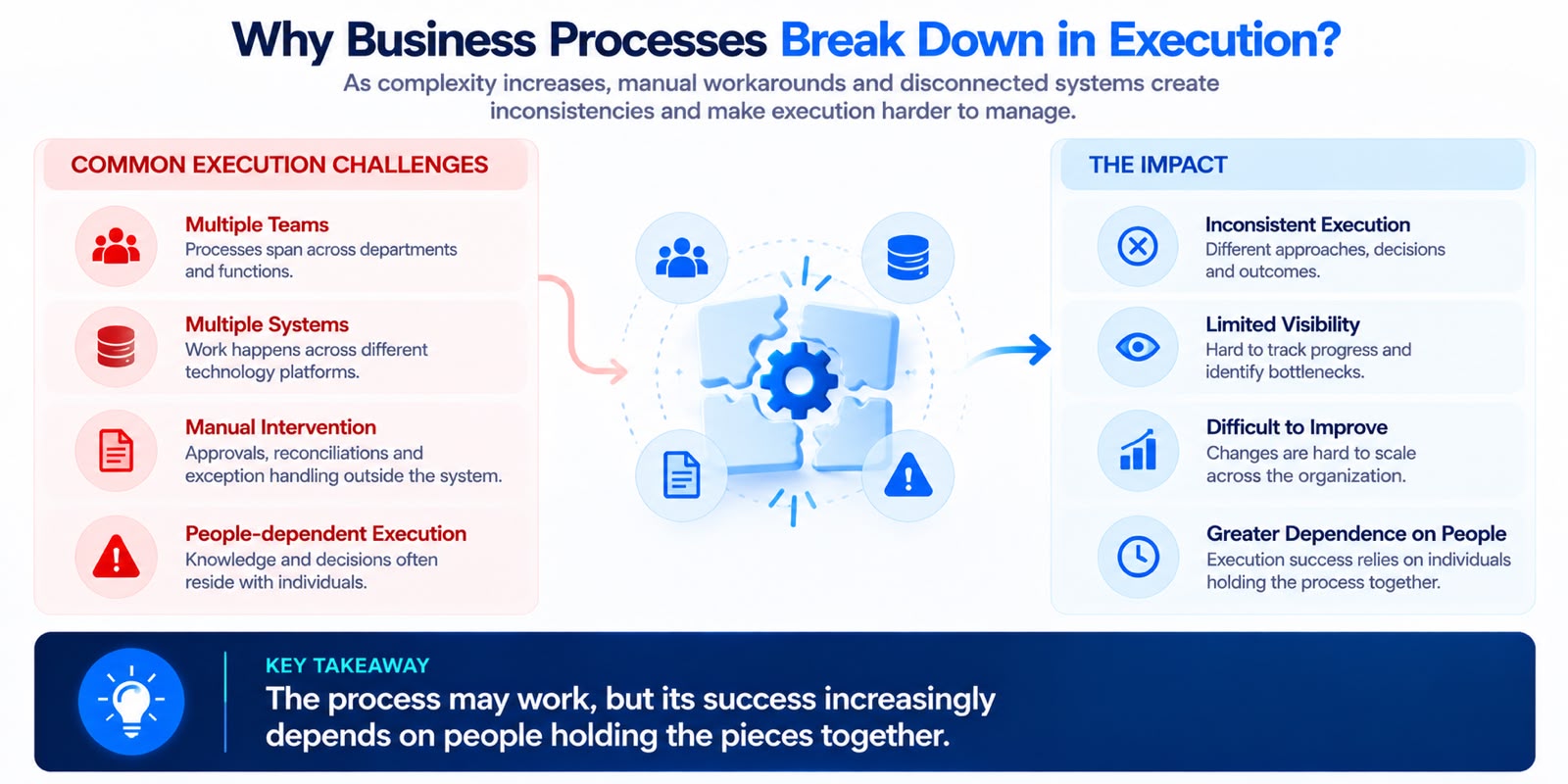
Organizations should first establish a clear process, defined ownership, decision points, business rules, data requirements, and measurable outcomes. Only then can technology effectively enable the process.
A disciplined approach typically focuses on several fundamentals:
Standardized processes that establish how work should be performed.
Clear ownership and accountability across functions and decision points.
Trusted data available when and where decisions are made.
Governance that defines rules, controls, exceptions, and escalation.
Connected workflows that allow work to move consistently across organizational and technology boundaries.
Measurement that provides visibility into whether the process is producing the intended business outcome.
Together, these elements turn process design into repeatable enterprise execution.
Where Technology Fits
Technology is an important enabler, but it should not become the starting point.
ERP, CRM, workflow automation, AI, and other enterprise platforms can accelerate execution. They cannot independently resolve unclear ownership, inconsistent processes, poor-quality data, or undefined decision rules.
Automating those conditions can simply make inconsistency happen faster.
The objective should therefore be to establish the process and governance foundation first, then determine how technology can best support execution.
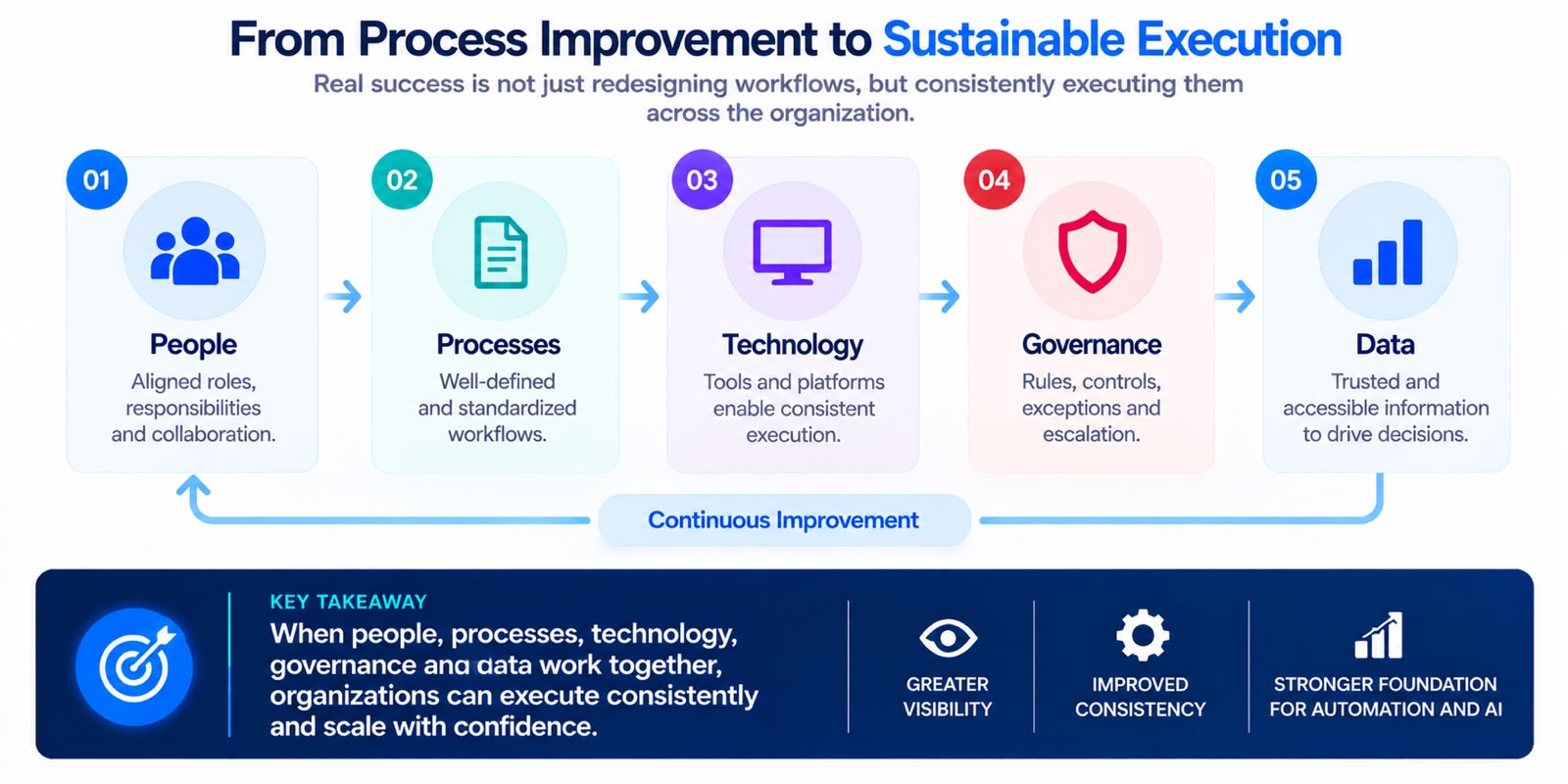
From Process Improvement to Sustainable Execution
Business process improvement is ultimately about more than redesigning workflows. The real measure is whether the organization can execute the improved process consistently after implementation.
That requires alignment between people, processes, technology, governance, and data.
When those elements work together, organizations gain greater visibility, reduce manual intervention, improve consistency, and create a stronger foundation for automation and AI.
Thinking differently precedes doing differently.


Mark Kruckeberg is the Managing Partner of Soltec and a recognized leader in enterprise transformation, operational excellence, governance, and AI readiness. With more than 26 years of experience leading large-scale business, operational, and technology initiatives, Mark has helped organizations improve execution, strengthen governance, optimize workflows, and build trusted data foundations. Today, he works with enterprise leaders to improve operational performance, organizational readiness, and long-term business outcomes while preparing their organizations for successful AI adoption and future innovation.