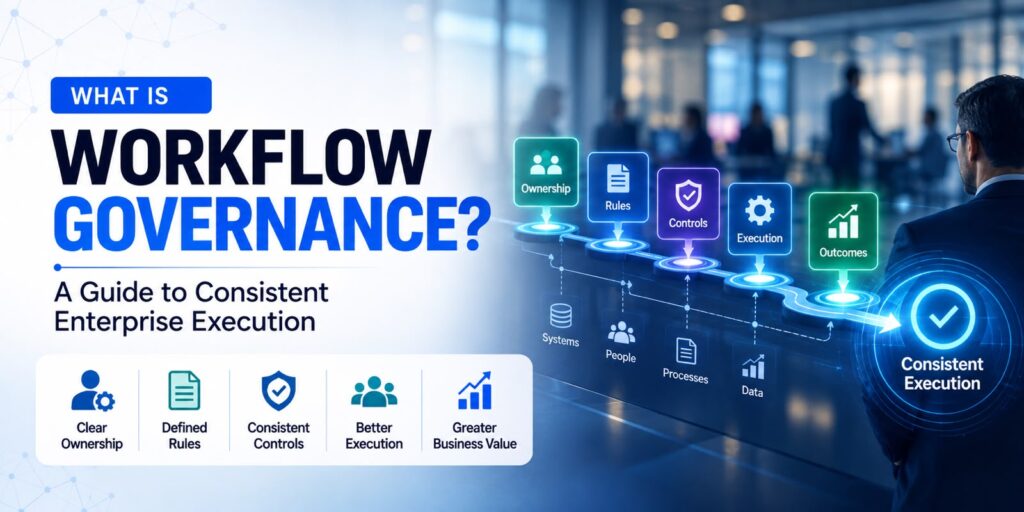
As enterprise workflows become more connected and automated, an important question becomes increasingly difficult to answer:
Who is responsible for ensuring the workflow actually works from beginning to end?
That is where workflow governance becomes important.
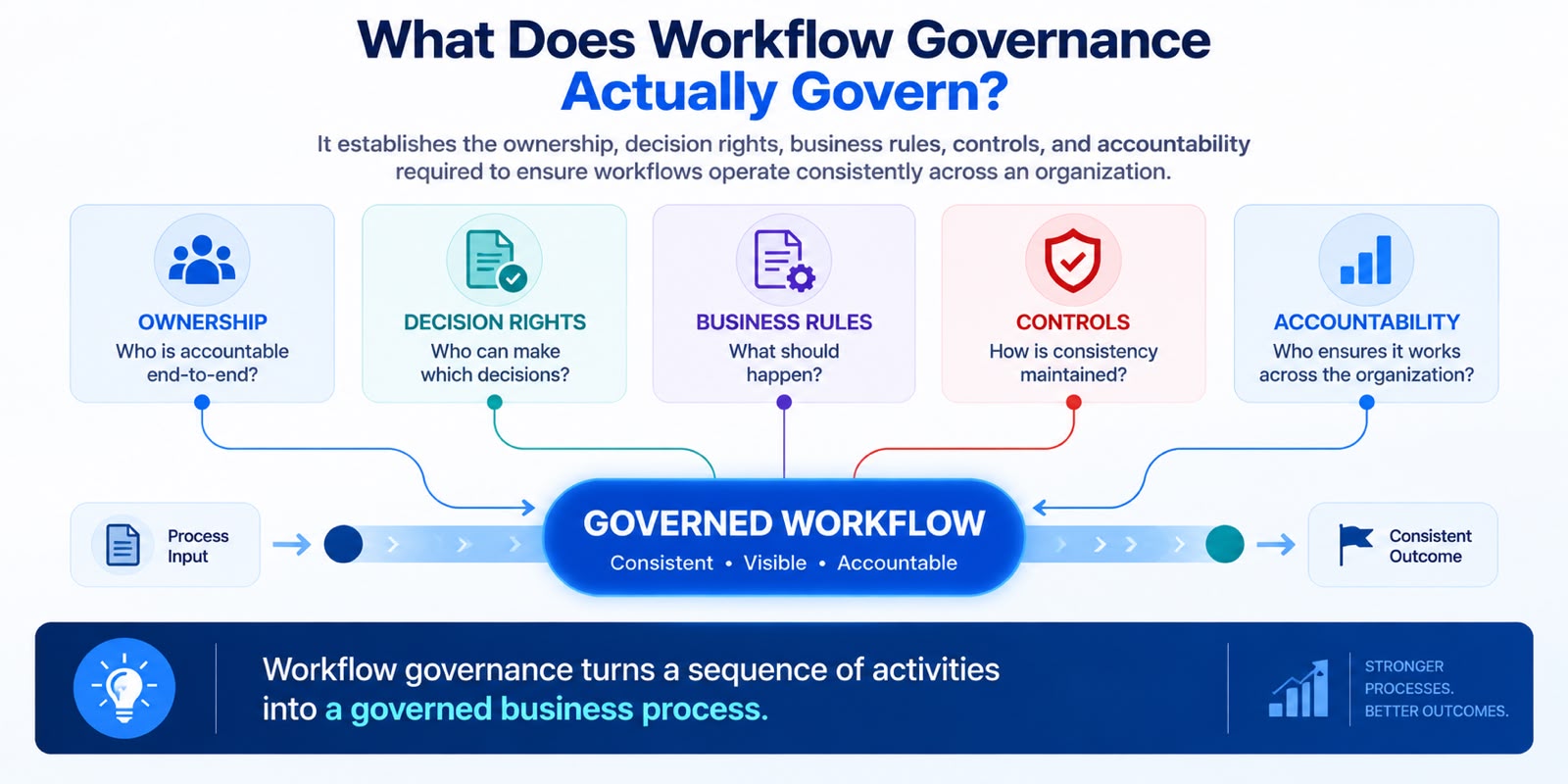
Workflow governance establishes the ownership, decision rights, business rules, controls, and accountability required to ensure workflows operate consistently across an organization.
It turns a workflow from a sequence of activities into a governed business process.
Why Workflow Governance Matters
Enterprise workflows frequently cross organizational boundaries.
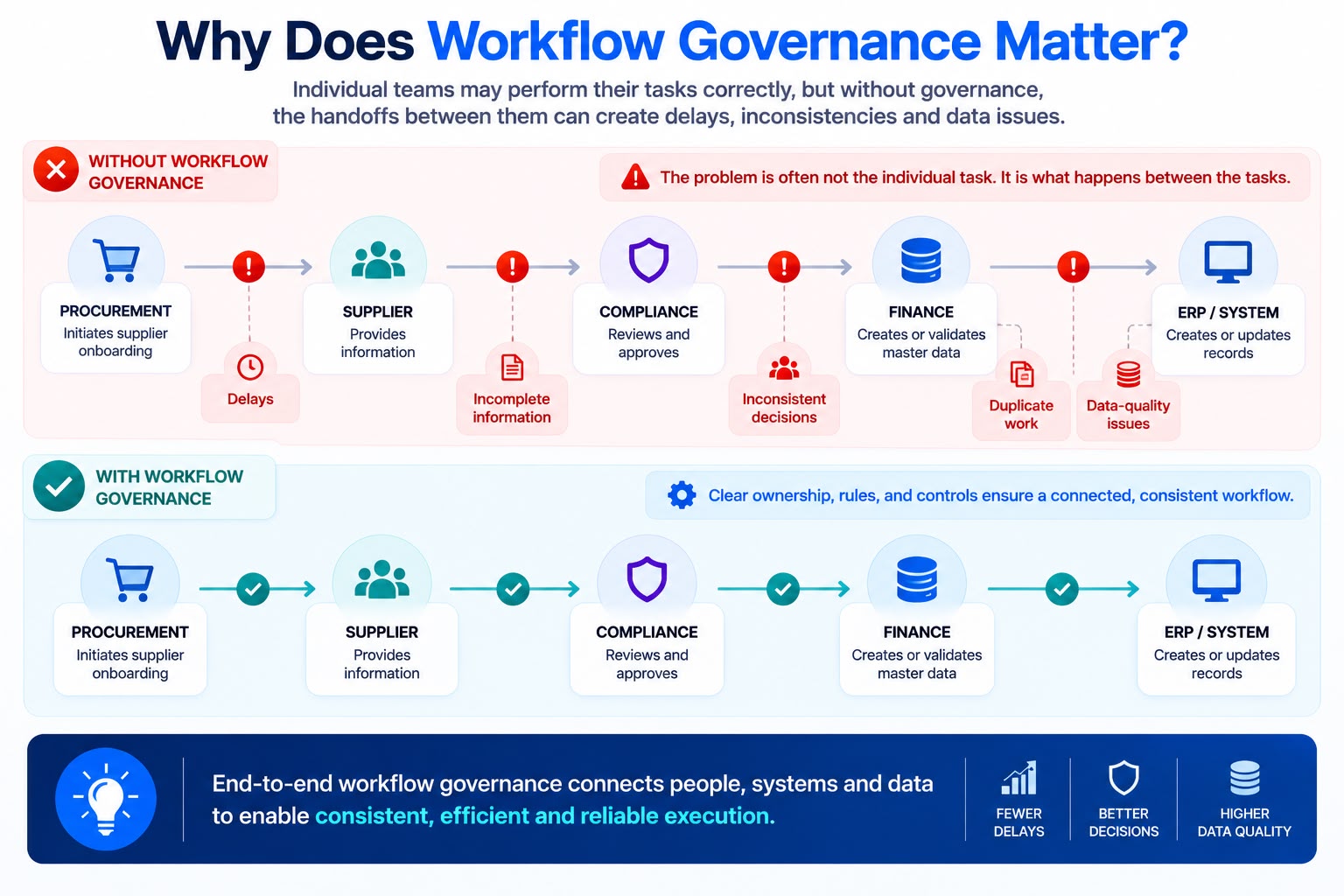
A supplier onboarding process may begin in procurement, require information from the supplier, involve compliance and finance, create or validate master data, and ultimately interact with an ERP or other enterprise system.
Each individual function may perform its responsibilities correctly while the overall process still experiences delays, inconsistent decisions, duplicate work, or data-quality problems.
The issue is often not the individual task.
It is what happens between the tasks.
Without clear governance, ownership can become fragmented. Exceptions are handled differently. Decisions move outside the workflow. Employees develop workarounds. And leadership may have limited visibility until something goes wrong.
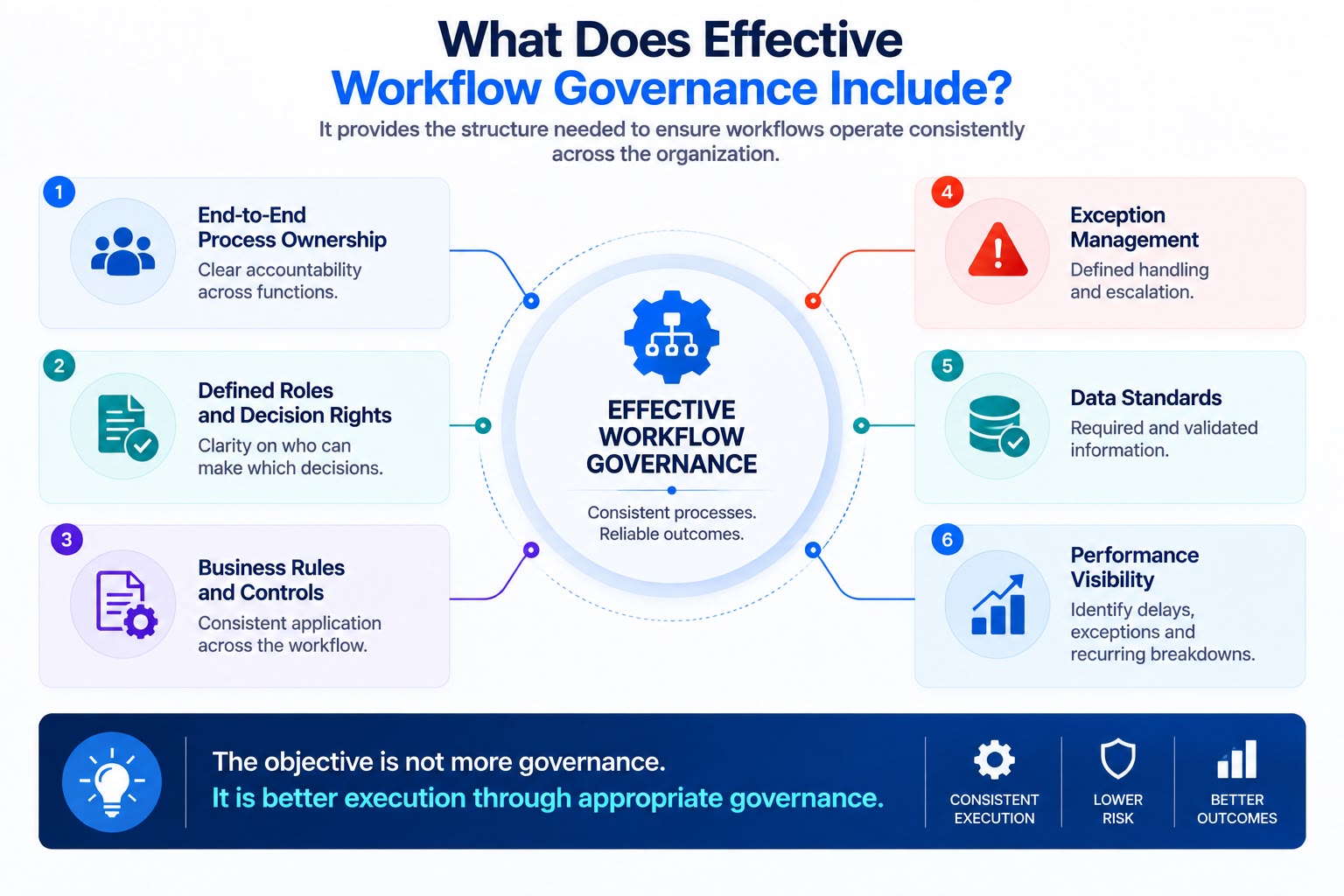
What Effective Workflow Governance Includes
Strong workflow governance does not mean adding unnecessary approval layers. It means establishing enough structure for the process to operate consistently.
That typically includes:
- End-to-end process ownership so accountability does not stop at functional boundaries.
- Defined roles and decision rights so people understand who can make which decisions.
- Business rules and controls applied consistently throughout the workflow.
- Exception management that defines how nonstandard situations are handled and escalated.
- Data standards that establish what information is required and when it must be validated.
- Performance visibility that allows the organization to identify delays, exceptions, and recurring breakdowns.
The objective is not more governance. It is better execution through appropriate governance.
Governance Becomes More Important as Automation Increases
Manual processes often rely on experienced employees to interpret incomplete information, recognize exceptions, and determine what should happen next.
Automation changes that dynamic.
Workflow automation and AI require clearer rules, better data, and more consistent decision logic because technology cannot reliably compensate for ambiguity in the same way experienced employees often do.
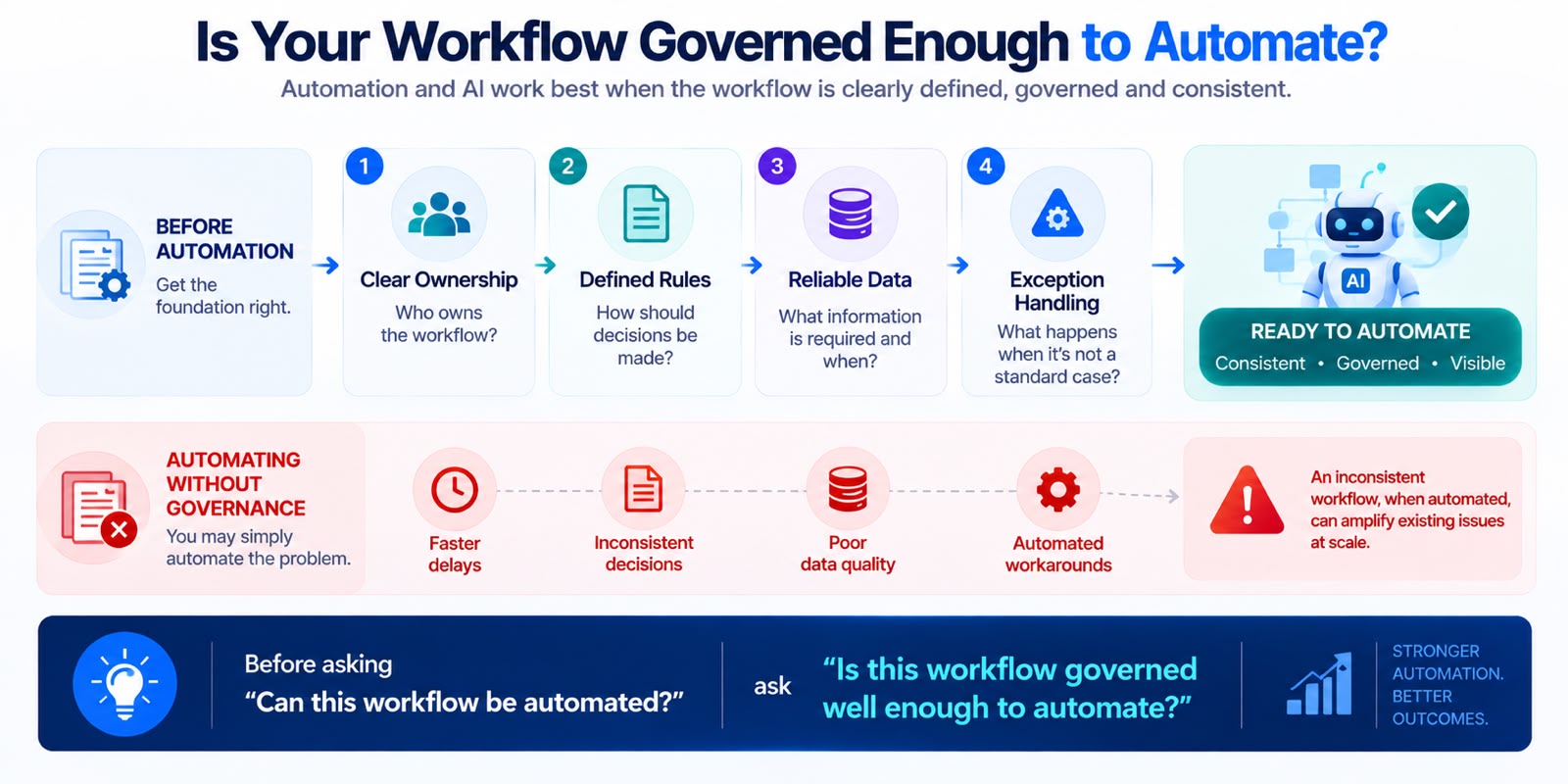
This is why automating an inconsistent workflow rarely solves the underlying problem.
Before organizations automate, they should understand how the workflow is supposed to operate, who owns it, what information it requires, how exceptions should be managed, and what outcome it is expected to produce.
From Workflow Governance to Enterprise Execution
Individual workflows do not exist in isolation. They interact with other processes, systems, data, and organizational functions.
Effective workflow governance creates consistency at those connection points.
That improves visibility, strengthens accountability, reduces reliance on manual workarounds, and creates a more reliable foundation for workflow automation, process orchestration, and AI.
For organizations pursuing greater automation, the question should not simply be “Can this workflow be automated?”
A better question is:
“Is this workflow governed well enough to automate?”
Thinking differently precedes doing differently.


Mark Kruckeberg is the Managing Partner of Soltec and a recognized leader in enterprise transformation, operational excellence, governance, and AI readiness. With more than 26 years of experience leading large-scale business, operational, and technology initiatives, Mark has helped organizations improve execution, strengthen governance, optimize workflows, and build trusted data foundations. Today, he works with enterprise leaders to improve operational performance, organizational readiness, and long-term business outcomes while preparing their organizations for successful AI adoption and future innovation.