Most enterprises do not have a shortage of technology.
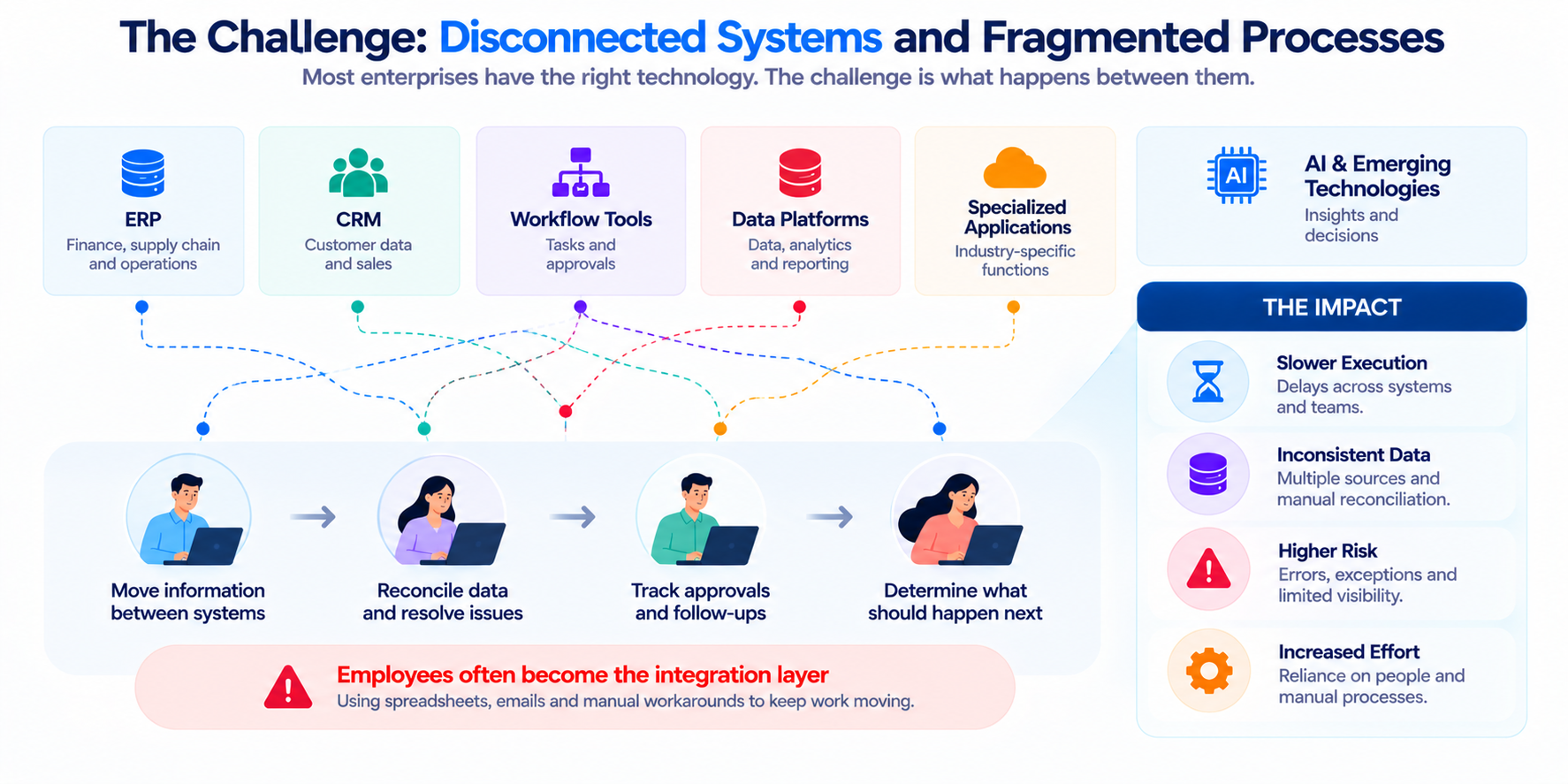
They have ERP systems, CRM platforms, workflow tools, data platforms, specialized applications, and increasingly, AI. Each may perform its intended function well.
The challenge is what happens between them.
Business processes routinely cross system, functional, and organizational boundaries. When those connections are not managed effectively, employees often become the integration layer—moving information, reconciling data, tracking approvals, resolving exceptions, and determining what should happen next.
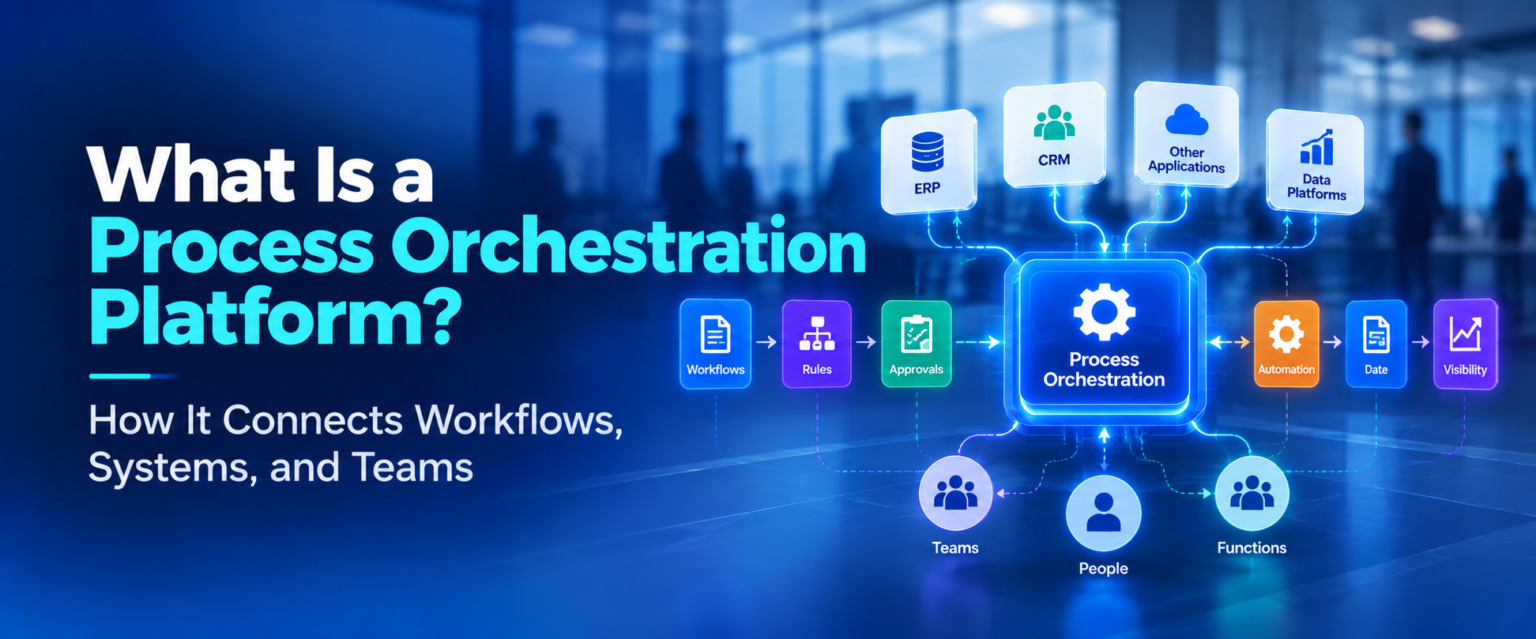
A process orchestration platform helps coordinate that execution across workflows, systems, data, and teams.
What Does Process Orchestration Mean?
Process orchestration is the coordination of activities, decisions, data, and systems required to execute an end-to-end business process.
Unlike automation focused on an individual task, orchestration considers how the entire process operates across the enterprise.
A customer onboarding process, for example, may involve sales, finance, compliance, operations, master data, and multiple technology platforms. Each system may support part of the process, but no individual system necessarily manages the complete journey.
Orchestration provides a way to connect those activities without requiring every underlying system to be replaced.
Why Existing Enterprise Systems Are Often Not Enough
ERP and other core platforms remain essential enterprise systems. But many were designed primarily to manage transactions within defined functional boundaries.
Business execution rarely stays within those boundaries.
As organizations grow, acquire businesses, add applications, or operate multiple ERP environments, processes can become increasingly fragmented. Employees compensate by moving between systems, using spreadsheets, sending emails, tracking approvals manually, and relying on institutional knowledge to keep work moving.
The problem is not necessarily that the underlying systems are failing.
The missing capability may be the execution layer between them.
What a Process Orchestration Platform Does
A process orchestration platform can provide a common layer for coordinating how work moves across the enterprise.
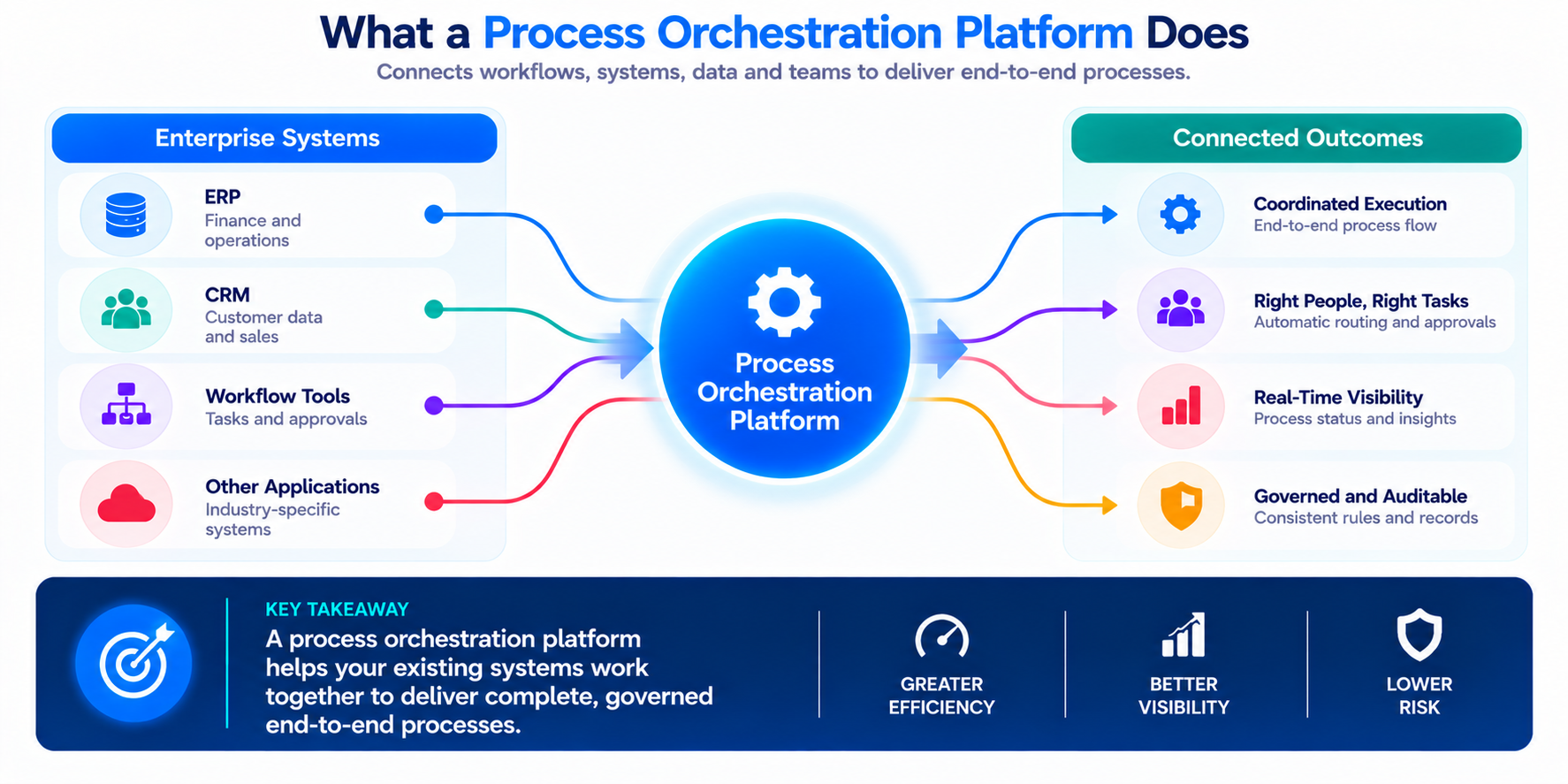
Depending on the process and technology environment, that can include:
- Connecting workflows across multiple enterprise systems.
- Applying consistent business rules and governance.
- Validating required data before it enters downstream systems.
- Routing tasks and decisions to the appropriate people.
- Managing approvals and exceptions.
- Providing visibility into process status and bottlenecks.
- Maintaining an auditable record of decisions and actions.
Rather than forcing one system to perform every function, orchestration helps existing systems work together as part of a governed end-to-end process.
Orchestration Is More Than Automation
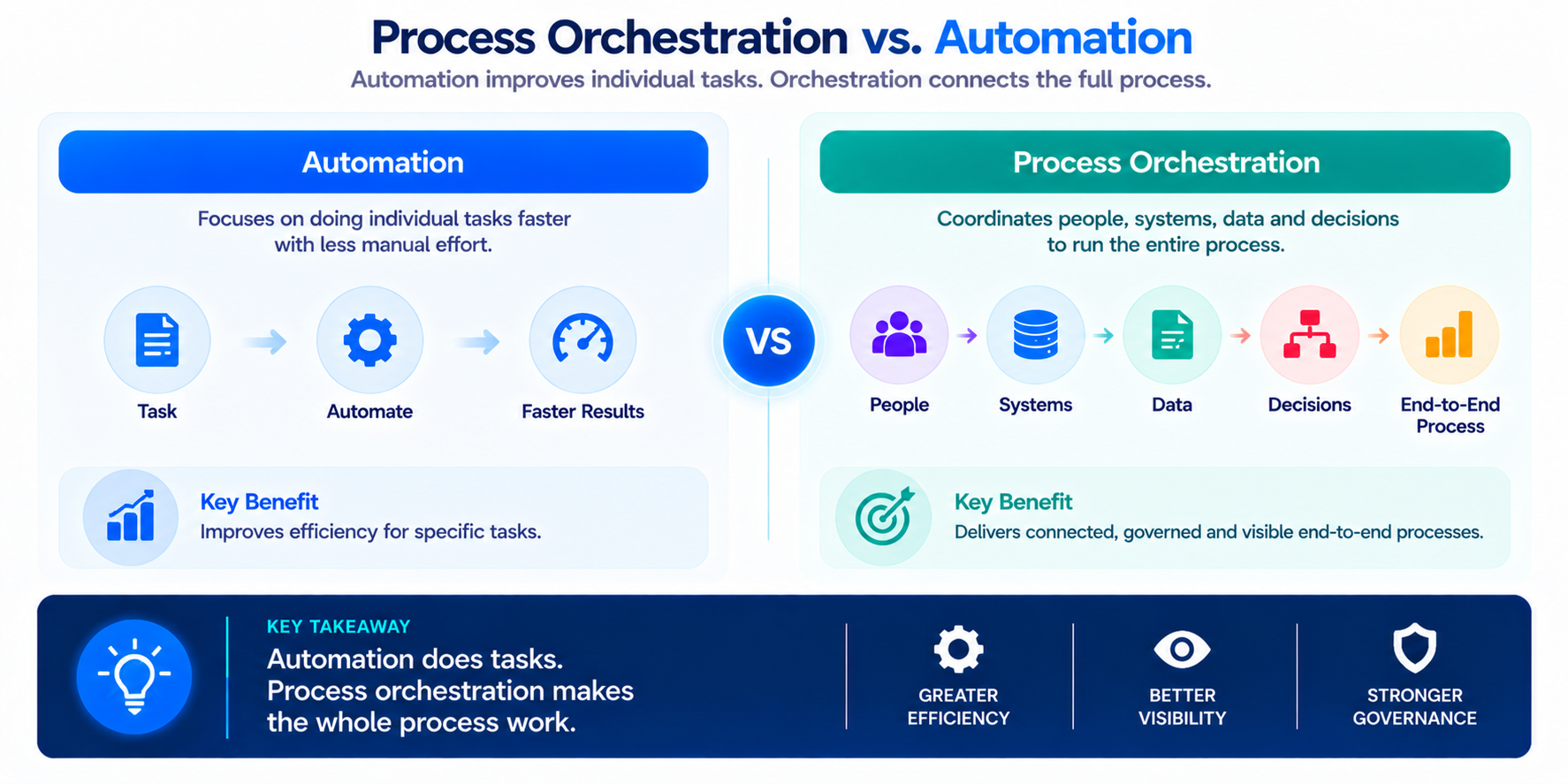
Automation and orchestration are related, but they solve different problems.
Automation typically asks:
How can we perform this task faster or with less manual effort?
Orchestration asks a broader question:
How should this entire process execute across people, systems, data, and decisions?
That distinction becomes increasingly important as enterprises introduce AI.
AI can accelerate individual activities and decisions, but it still depends on reliable context, trusted data, clear rules, and connected workflows. Adding AI to a fragmented process does not eliminate the fragmentation.
When Should Organizations Consider Process Orchestration?
Process orchestration becomes particularly relevant when organizations experience recurring challenges across system or functional boundaries.
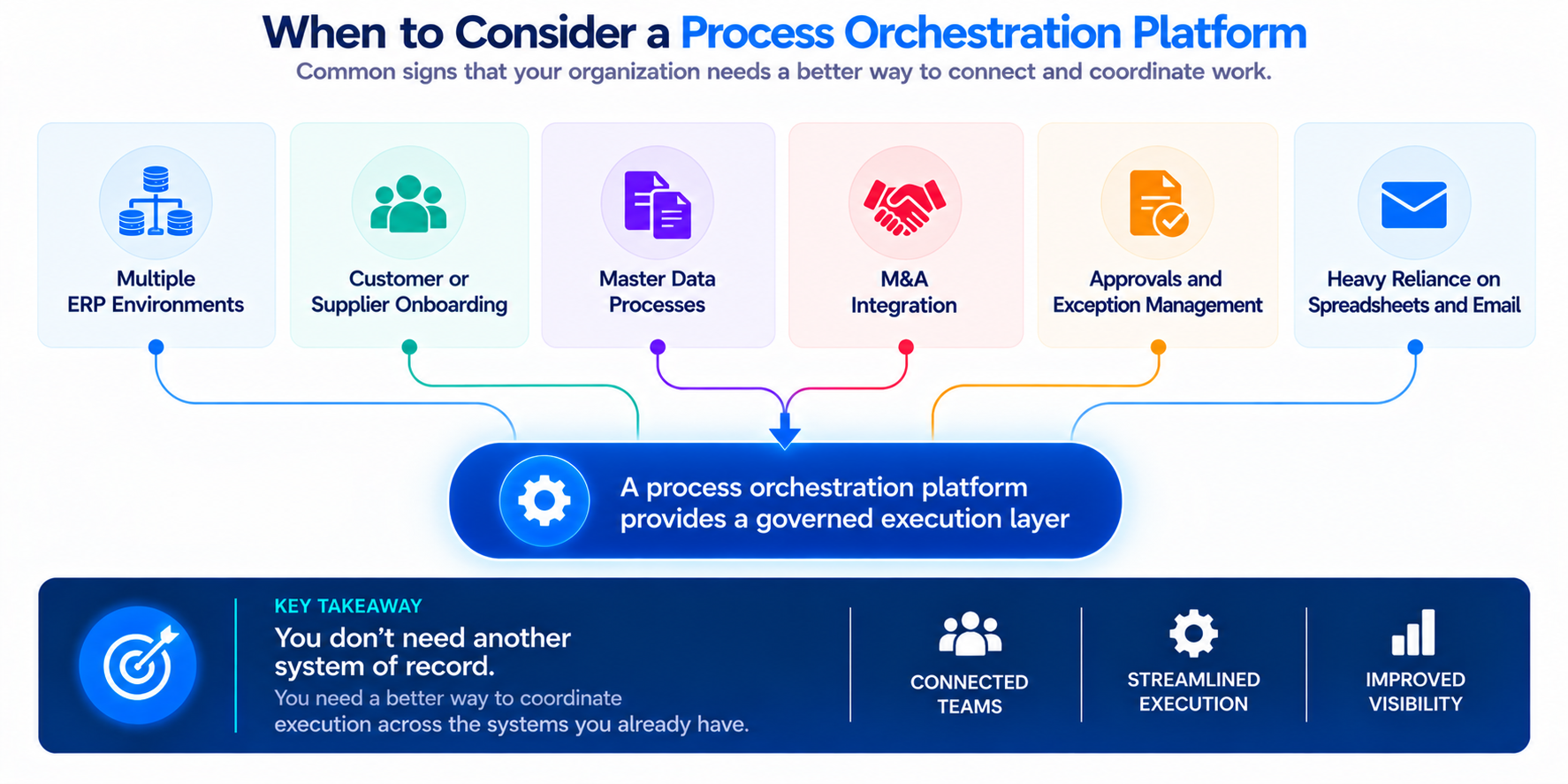
Common examples include multi-ERP environments, customer and supplier onboarding, master data processes, M&A integration, approvals, exception management, and workflows that depend heavily on spreadsheets, email, or manual reconciliation.
These are often signs that the organization does not need another system of record.
It needs a better way to coordinate execution across the systems it already has.
A process orchestration platform can provide that governed execution layer—connecting workflows, systems, data, and people while allowing existing enterprise technology investments to continue doing what they were designed to do.
Thinking differently precedes doing differently.


Mark Kruckeberg is the Managing Partner of Soltec and a recognized leader in enterprise transformation, operational excellence, governance, and AI readiness. With more than 26 years of experience leading large-scale business, operational, and technology initiatives, Mark has helped organizations improve execution, strengthen governance, optimize workflows, and build trusted data foundations. Today, he works with enterprise leaders to improve operational performance, organizational readiness, and long-term business outcomes while preparing their organizations for successful AI adoption and future innovation.